

E-International Relations
Download PDF
Nov 26 2025
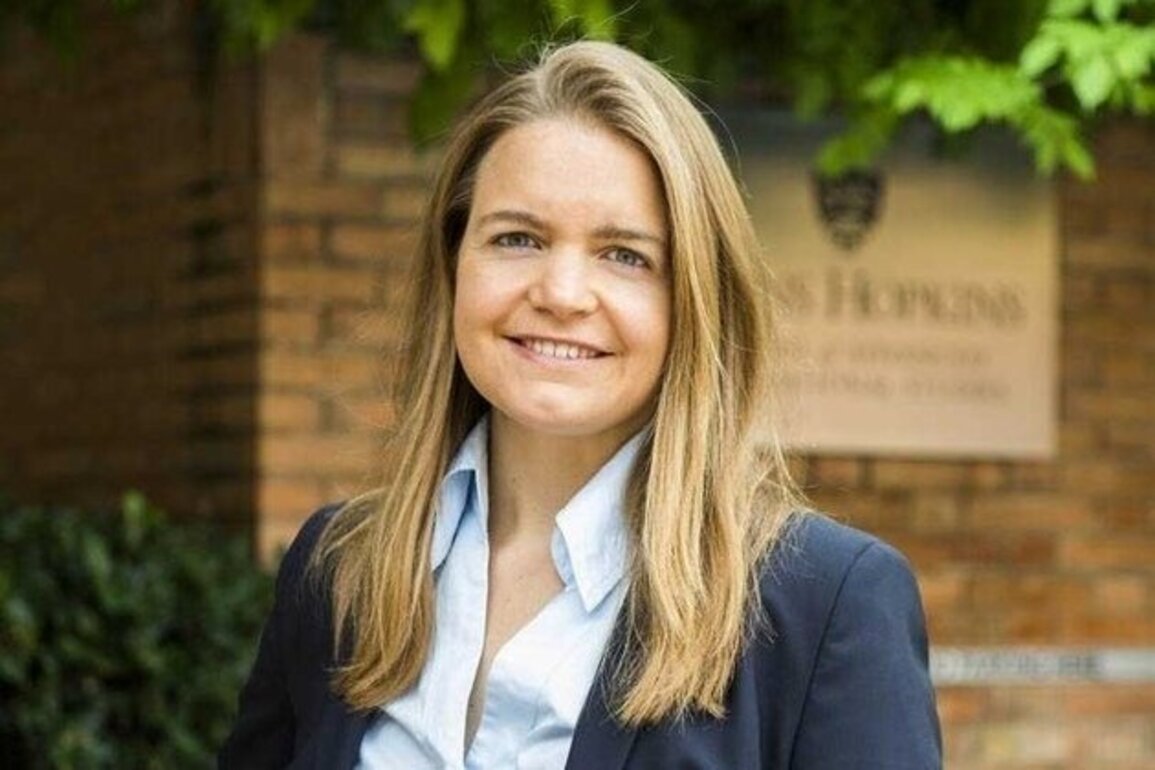
Image by Nina HallNina Hall is an Associate Professor of International Relations at Johns Hopkins School of Advanced International Studies. Her current research explores how countries led by far-right leaders engage in global environmental politics. She has ongoing research on transnational advocacy, international organizations, climate litigation and New Zealand foreign policy.
Nina holds a DPhil (PhD) in International Relations from the University of Oxford and a Masters Degree from the University of Auckland, New Zealand. She was previously a Lecturer at the Hertie School of Governance, a Senior Fellow at the Weizenbaum Institute for the Networked Society in Berlin, and a Research Associate at the Centre for Strategic Studies, Victoria University of Wellington, New Zealand. She is a Faculty Affiliate at the SNF Agora Institute and the co-founder of an independent think tank, Te Kuaka (formerly New Zealand Alternative). Nina Halls most recent book is Climate Activism, Digital Technologies, and Organizational Change, (CUP, 2024), with Mette Eilstrup-Sangiovanni.
Where do you see the most exciting research/debates happening in your field?
International Relations is a dynamic discipline which has changed dramatically since I was a student. Im particularly excited by how international relations is seeking to cultivate a diverse set of perspectives from all around the world and not just the Global North or the Western world.
Theres naturally a lively debate about how to de-center and decolonize the discipline, and the risks of essentializing perspectives, asBarnett and Zarakolhave pointed out.After all, separating out the West from the Non-West is complicated by the fact that goods and people have circulated across the globe for centuries; hence there is not a clear distinction between West and Non-West.
Theres another important angle thatPinar Bilginhas pointed out: countries in the non-West may actually adopt similar policies and positions to the West, even if they do so for different reasons. She calls this mimicry and offers the example of Turkeys decision to be a secular state in the aftermath of the Ottoman empire. She suggests this was not merely emulating western nation-state norms at the time, but also a way to ensure other Western countries had less reason to intervene in order to protect religious minorities.
In short, we need to be open to, and curious about the long history of interactions between different parts of the world; while also recognising the limits of our existing approaches and theories. Im delighted to be teaching and studying international relations when theres so much energy in the debate about decentering IR, opening up the discipline to powerful new voices and perspectives!
How has the world changed over time, and what (or who) prompted the most significant shifts in your thinking?
My own views of how change occurs in world politics have evolved as I have shifted from studying the United Nations, to studying small digital activist organizations. Myfirst bookfocused on the UNs development and humanitarian agencies. I was interested in whether and how the United Nations High Commission for Refugees (UNHCR) and the International Organizations for Migration (IOM) were expanding beyond their traditional mandates, and what was prompting them to change. I interviewed more than 100 government officials, and UN staff in Kenya, Geneva and New York. The insights I gained shed light on the role bureaucrats can play; but also the slow pace of such change, if it occurred at all. Furthermore, these international bureaucrats were often blocked by member-states; who ultimately fund international organizations and agree to mandate expansions.
Meanwhile mysecond book, threw me into a completely different world of rapid-response digital advocacy organizations that mobilize people on-line and on the streets. These organizations can launch campaigns within hours of a breaking news story, and mobilize thousands on issues such as refugee rights or free trade agreements. I studied these organizations using ethnographic methods: I would attend large activist meetings and sit in their offices and watch how they campaigned. I saw how IR was not simply an elite project of officials working in capital cities but could also touch the lives of the general public.
One interesting element of this research was examining when and why international agreements generated large public demonstrations and backlash; and what the role of advocacy was in mobilizing support or dissent. On the one hand there were large demonstrations in support of the United Nations Framework Convention on Climate Change, and advocating for the Paris Agreement. These were well-coordinated by climate activist groups such as 350.org, and latter Fridays for Future. These protests, as Ivewrittenabout, enabled anyone, anywhere, to start a march and be part of a global movement.
On the other hand there were large protests against several major trade agreements, such as the Transatlantic Trade and Intellectual Property Agreement (TTIP) and the Transpacific Patnership Agreement (TPPA). These protests built on previous decades of anti-globalization organization, including very large demonstrations against the WTO at Seattle in 1999 and in Genova in 2001. TTIP never passed, due in large part to these protests, although the TPPA eventually did (but without the US).
The United NationsGlobal Compact on Migrationwas another instance of backlash. In many countries people protested against this Compact which they saw (incorrectly) as an agreement overriding state sovereignty and enabling the UN to determine their migration policy. In fact, the Compact became so politicised by the far-right that many countries did not sign it. As recentresearchhas shown, the UN has had a hard time communicating to the general public about the value of certain international agreements, and in particular responding to critiques from the far-right. This led me to my current research: exploring how far-right governments are engaging or not in global environmental agreements. In short, Ive always closely followed current events, and am interested in how we as scholars can unpack deeper trends beneath the headlines to identify and understand world politics.
In your recently published books, you explored how digital technologies shape todays diplomacy. Amid growing concern about the misuse of digital technologies, do you think efforts around digital diplomacy will persist?
We live in a world where digital technology is central to much of what we do. My most recentbook, co-authored with Mette Eilstrup-Sangiovanni, explores how digital technologies have both helped and hindered climate activists. Activists have been quick to use social media to mobilize. They have taken advantage of satellites to monitor illegal fishing and deforestation, and methane leaks as well as states climate actions.Human rights organizationsare specializing in verifying video footage to use as evidence of mass atrocities. We also see new organizations emerging, such asBellingcat. Bellingcat is a network of citizen investigators who use open source information to conduct complex investigations.Bellingcathas been extremely fast and effective they were the first to identify who poisoned Navalny for instance.
However, activists are at greater risk of surveillance and repression when they use digital technology. Recent studies suggest both democracies and autocracies areshrinking civic spaceand engaging in surveillance. TheItalian governmentfor instance allegedly used sophisticated spyware to monitor activists working for humanitarian NGOs in 2025. The spyware targeted the founders ofMeditteranea Saving Humans, an NGO which assists asylum-seekers at risk, especially those crossing the Mediterranean. In short, advances in digital technology come with major risks for activists. For this reason, we have seen new campaigns for human rights and privacy in the digital age, and AccessNow for example has established adigital help lineto help activists.
The role of NGOs is part of your research focus. In todays increasingly polarized and fragmented international political landscape, do you believe these advocacy organizations can maintain their influence?
Great question, although theres a couple of assumptions worth unpacking here! Firstly, many scholars in IR assumed that NGOs always campaign for progressive issues such as human rights or climate change. But not all NGOs are progressive, and there are some excellent and informative studies of conservative NGOs and organizations. Take for instance, the recent book by Phil Ayoub and Kristina StoecklThe Global Fight Against LGBTI rightswhere they explore the tactics and strategies of a morally conservative transnational advocacy network.
I have also co-authored an article on how far-right groups have emulated left-wing progressive organizations on-line. We identify right-wingcopycatsof the rapid response, on-line petition campaigning model that MoveOn and other progressives pioneered in the early noughts. What is important is that sometimes NGOs can contribute to the polarization and fragmention of the political landscape in the first place.
Secondly, the influence of NGOs has always been challenged by their own internal accountability structures (or lack thereof). Many NGOs do not directly represent the people they claim to act on behalf of; nor do they even employ them. In fact, many of the most powerful NGOs were established in the global North; funded by donors in the global North often with the intention to help others in the global South. But this very structure creates legitimacy dilemmas for NGOs, dilemmas that scholars like George Mitchell, Hans Peter Schmitz and Tosca Bruno van Vijfeijken, have written about in theirbook. Although, its also worth noting some NGOs are now trying to confront these dilemmas including by shifting theirheadquarters to the Global South.
Thirdly, theres an additional challenge for NGOs: theyre operating in the context ofshrinking civic space. States are using violent repression, administrative crackdowns, criminalization of protest and lawfare to restrict the ability of NGOs to form, fundraise and operate. Administrative restrictions are increasingly widespread in democracies, as a number of scholars such asSuparna ChaudhryandNicole Bolleyerhave documented. What is heartening to learn is that someNGOs are adaptingto these restrictions. They can do so by changing their legal forms, or fundraising model, or simply shifting country to keep operating. Although, this does not work for all NGOs and some are really suffering due to the increasinglyrestrictive and risky environmentfor activists to operate in.
What motivated you to explore this topic and what are you aiming to uncover?
Im a New Zealander, and continue to closely follow the countrys foreign policy even though Ive lived abroad for over fifteen years. Before starting my academic career I worked briefly at the Ministry of Foreign Affairs and Trade (MFAT). I was hired and trained to represent New Zealand as a diplomat, and Ive long kept an interest in what New Zealand does internationally. Several years ago I set up an independent organization,Te Kuaka, with a group of New Zealanders. We have co-authored reports, newspaper articles, and abookon New Zealands role in the world. I was delighted the paperback book was sent to most high-schools in New Zealand as part of an initiative by the publisher,Bridget Williams Books, and sold at low cost many bookstores across the country.
My current research builds on all of this to examine if and how New Zealand has engaged with Mori and Mori worldviews in foreign policy decision-making. After all, New Zealand is often seen internationally as a leader in race relations between settlers and indigenous peoples. Yet New Zealand has also helped toembed racial hierarchieswithin the international order. At the Paris Peace Conference in 1919, for example, New Zealand blocked Japans proposal for a Racial Equality Clause. In addition, New Zealand has not honoured the Treaty of Waitangi, a treaty signed in 1840 between representatives of the British Crown and Mori leaders.
In particular, New Zealand has also not upheld its commitments to ensure Moritino rangatiratanga(or sovereignty). New Zealand had few Mori diplomats until the 1980s and 1990s. My aim is to explore if and how New Zealand foreign policy has changed over time. More specifically, I want to assess the challenges and limitsNanaia Mahutafaced as a Foreign Minister. Mahuta was the first foreign minister to come from Mori royalty and to explicitly position Mori values at the centre of foreign policy. Through this research, I hope to also contribute to, in a small way, to the broader, sustained public debate occurring now in New Zealand about the role of the Treaty of Waitangi.
Based on your research, what advice would you suggest to the New Zealand Government to address the issue of indigenous representation in foreign policy?
Firstly the government should honor the Treaty of Waitangi, which means acknowledging that Mori have legitimate claims to tino rangatiratanga and sovereignty in New Zealand. In the area of foreign policy, this translates to engaging with Mori as equal partners, not merely as another set of stakeholders in decision-making. Mori iwi (tribes) may want to advocate for foreign policy which differs from that of the state. Importantly, the exact governance arrangements for doing so need to be a conversation between Mori leaders and the government. It should not be decided via referendum as some members of the current government have suggested. For those interesting in learning more about this, Id strongly recommend the work of Maria Bargh, who wrote a great article onIndigenous Peoples and Foreign Policy: the Case of New Zealand.
There has been a growing interest in incorporating non-Western perspectives in the study of IR. To what extent do you think these views will reshape the field?
Ive been teaching IR theories for over eight years to students at Johns Hopkins SAIS Europe. Ive noticed how students are hungry to engage with a wide range of perspectives on international relations, not just the established canon. Whats great is that there is a rich and vibrant range of scholarship to draw on, which is already reshaping the field. It would be hard to list it all here! A few examples of work Ive particularly enjoyed include: Robbie Shilliams book on TheBlack Pacific: Anti-Colonial Struggles and Oceanic Connectionswhich examines connections between Black Power movements in New Zealand and the US and beyond. Shilliams more recent bookDecolonizing Politicsis another excellent read. He pairs the English School scholar Martin Wight with activists who wanted to make the Pacific nuclear free. He does this to examine different conceptions of world order. Theres lots of excellent work coming out of the Pacific too such as Marco de Jongs work on Mori activists involvement in theNuclear Free and Independent Pacific (NFIP)movement.
Theres also a reconceptualization of IR as a discipline based on empire (and not only concerned with politics between great powers). For example, recent books have reengaged with the Howard School, and emphasised the contribution of scholars such asRalph Bunche, andMerze Tate. This work is important as it shows how central debates about empire, and aWhite World Orderwere to the birth of American IR. Theres so much more to read!
What advice do you have for young scholars of IR?
In my view, it is important to read widely, beyond academic scholarship, and be open to contrasting views from your classmates, family and friends. Understanding why people might perceive an issue differently is important, even if you dont agree with them. Open dialogue and curiosity is key!
Further Reading on E-International Relations
- Interview Samuel Ritholtz
- Interview Jan Ldert
- Interview Tom Fletcher
- Interview Sharon Bong
- Interview Jamie Hagen
- Interview Taylor Robertson McDonald
Kihyun Kim
TagsDecolonisationDigital DiplomacyIndigenous PeopleLGBTQ+NGOsTechnology